No sky goal
You train skills in isolation without knowing how they transfer to freefall.

Tunnel training and sky camps in Spain
You train skills in isolation without knowing how they transfer to freefall.
The training may be too advanced, too broad or not connected to your current foundation.
Tunnel progress is not connected to jump video, coached debriefs or next sky tasks.
A camp can be useful, but only when the group level, tasks and expectations match your current ability.
New jumpers often want advanced skills before their base is stable enough.
Tunnel, sky jumps and camps work better when they are connected into one progression plan.
The issue is not training more. The issue is training without connection.
Find your focus
You want to use tunnel time to improve real skydiving skills, not just fly more minutes.
You are jumping, but body position, stability, turns, exits, fall rate or awareness are not improving clearly.
You want a structured training environment, but you are not sure which camp matches your level.
You want to understand how tunnel skills translate into exits, freefall tasks and group jumps.
You want your tunnel work connected to real sky jumps, video feedback and debriefs.
You want to join a tunnel or sky group only if the level, timing and training goal actually fit you.
Understand your current jump number, tunnel experience, body position, goals and recent video if available.
Choose the most useful training focus for your level: stability, turns, fall rate, exits, tracking basics or group skills.
Plan tunnel time around specific drills instead of random flying.
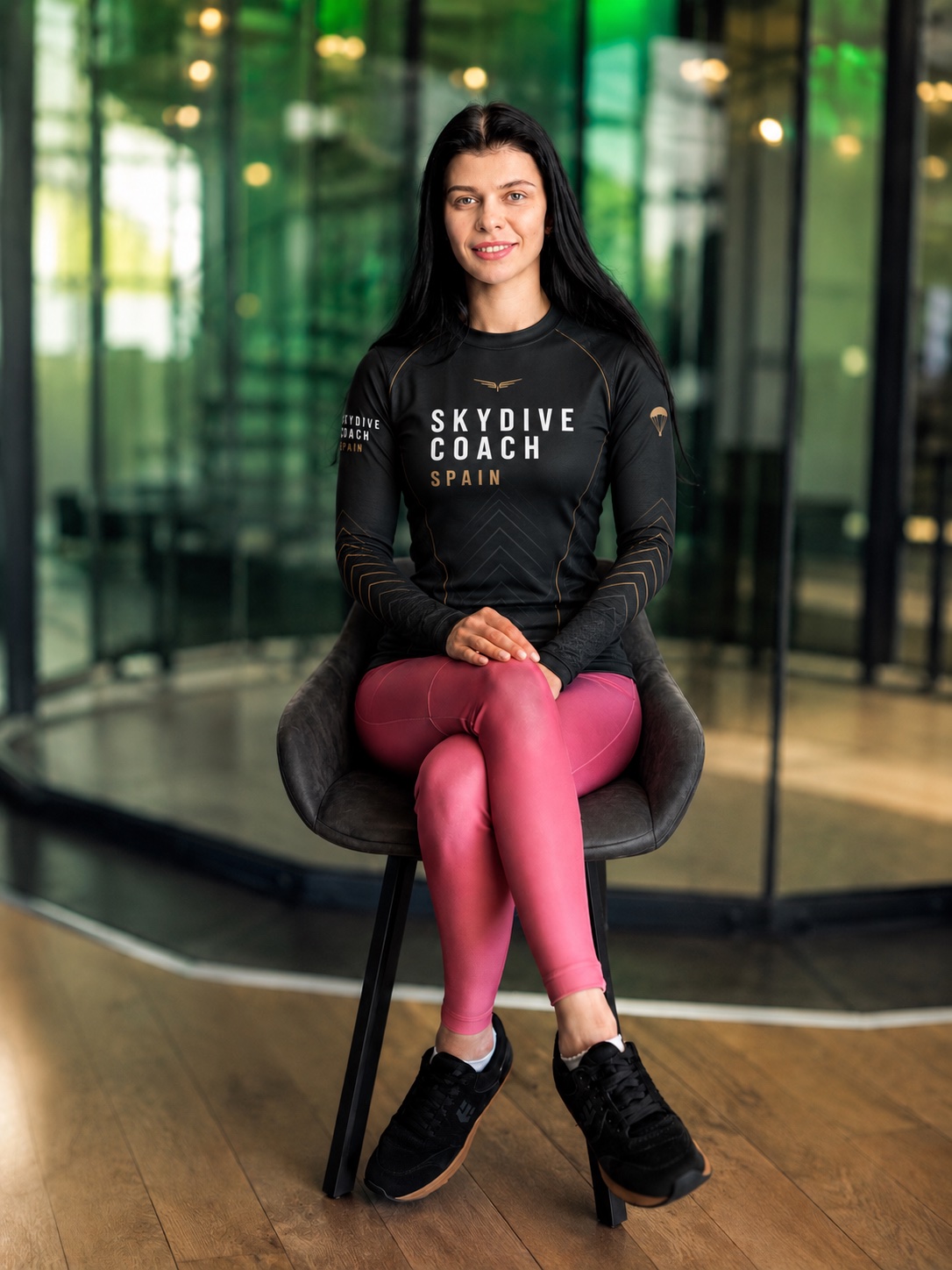
Karina supports focused bodyflight work in the tunnel: body position, stability, turns, fall rate and control.
Review what changed, what still needs work and what should transfer to the sky.
Use sky jumps to test whether the tunnel work actually improves freefall performance.
Connect jump footage back to the training plan.
Decide whether a tunnel camp, sky camp, small group or mixed progression block makes sense.
Update the roadmap based on your progress, confidence and next goal.
Student media will appear here after consent review.


Camp timing
The camp should match your current skills, awareness and confidence.
Every camp should have a training purpose: exits, body position, tracking, group skills, confidence or another focus.
Group size and task complexity should make sense for your level.
Tunnel time, briefing, video review or coached jumps may be needed before the camp.
A useful camp turns jumps into lessons, not just memories.
After the camp, you should know what to keep training.
Not every camp is right for every jumper — timing and level fit matter.
Connected training
A focused plan for what to train in the tunnel and why.
Focused bodyflight work with Karina when tunnel development fits the roadmap.
Jump tasks connected to the same progression goal.
Review tunnel and sky footage to identify patterns and next actions.
Help choosing whether a tunnel camp, sky camp or mixed block fits your level.
Manual review of level, dates and goals before joining a small progression group.
Trusted tunnel coaches, instructors or camp formats can be connected when useful.
A plan that connects training blocks instead of treating them as separate bookings.
The goal is continuity: every block should make the next block clearer.
Current intake
Next windows are confirmed by enquiry. Send target dates before booking travel so the route can be checked against weather, coaches and group fit.
Most group formats require at least AFF completion, current logbook details, honest currency, and sometimes an A licence or recent freefall video.
A common block is 10, 20 or 30 minutes of focused tunnel work paired with sky tasks, video review or a coached jump day when appropriate.
Before joining, send jump number, tunnel time, recent video if available, preferred dates, travel ability and the skill you want to improve.
If your level is not ready for a group, the better next step may be a video review, tunnel prep or one coached jump day first.
Keeps the full roadmap connected: AFF context, post-licence progression, coached jumps, camp readiness and next-step decisions.
Supports tunnel development, body control, stability, turns, fall rate and tunnel-to-sky skill transfer.
Tunnel work, sky jumps, video review and groups should serve the same progression goal.
The goal is simple: train the right skill in the right place, then connect it back to real skydiving.
Manual intake
For skydivers who want focused bodyflight work connected to real freefall goals.
Plan my tunnel-to-sky routeFor jumpers who want tunnel training followed by coached sky jumps and video feedback.
Send my datesFor licensed skydivers ready for structured group jumps, debriefs and next-step planning.
If the group is not the right fit yet, you can get a smaller preparation plan first.
Groups are selected manually so the level, goal and timing make sense.
Coach-led network
Some tunnel or camp stages may involve trusted tunnel coaches, instructors, specialists or partner formats. The important part is continuity: every training block should serve your progression instead of becoming another disconnected booking.
The point is not to train everywhere. The point is to train the right thing at the right time.
Karina supports focused tunnel development when bodyflight work fits the skydiving plan.
Specialist tunnel coaching or facilities can support focused skills when needed.
Camps can be useful when the level, group and training goal are appropriate.
Coached jumps help test whether tunnel skills are transferring into real freefall.
Video connects what happened in training to the next practical adjustment.
The roadmap keeps every training block connected to the next stage.
Share your current jump number, tunnel experience, timeframe and what you want to improve, and I’ll help you work out whether tunnel, a camp or coaching support makes the most sense right now.
You do not need a complete plan before you ask. A short message is enough to start with.